
Go slower. You’re carrying a lot.
A couple of months ago, my Dad was diagnosed with Alzheimer's.
I thought I had accepted it pretty quickly. I understood what was happening. We've talked about it a lot and I started learning what I could.
I've since learned there are stages to acceptance. It took until last week for the reality of it to really set in after attending a four and a half hour class with my Dad through Emory's Cognitive Empowerment Program. We learned about mild cognitive impairment, nutrition, exercise, brain health, and what the disease can mean not only for the person diagnosed, but for the people who love and care for them.
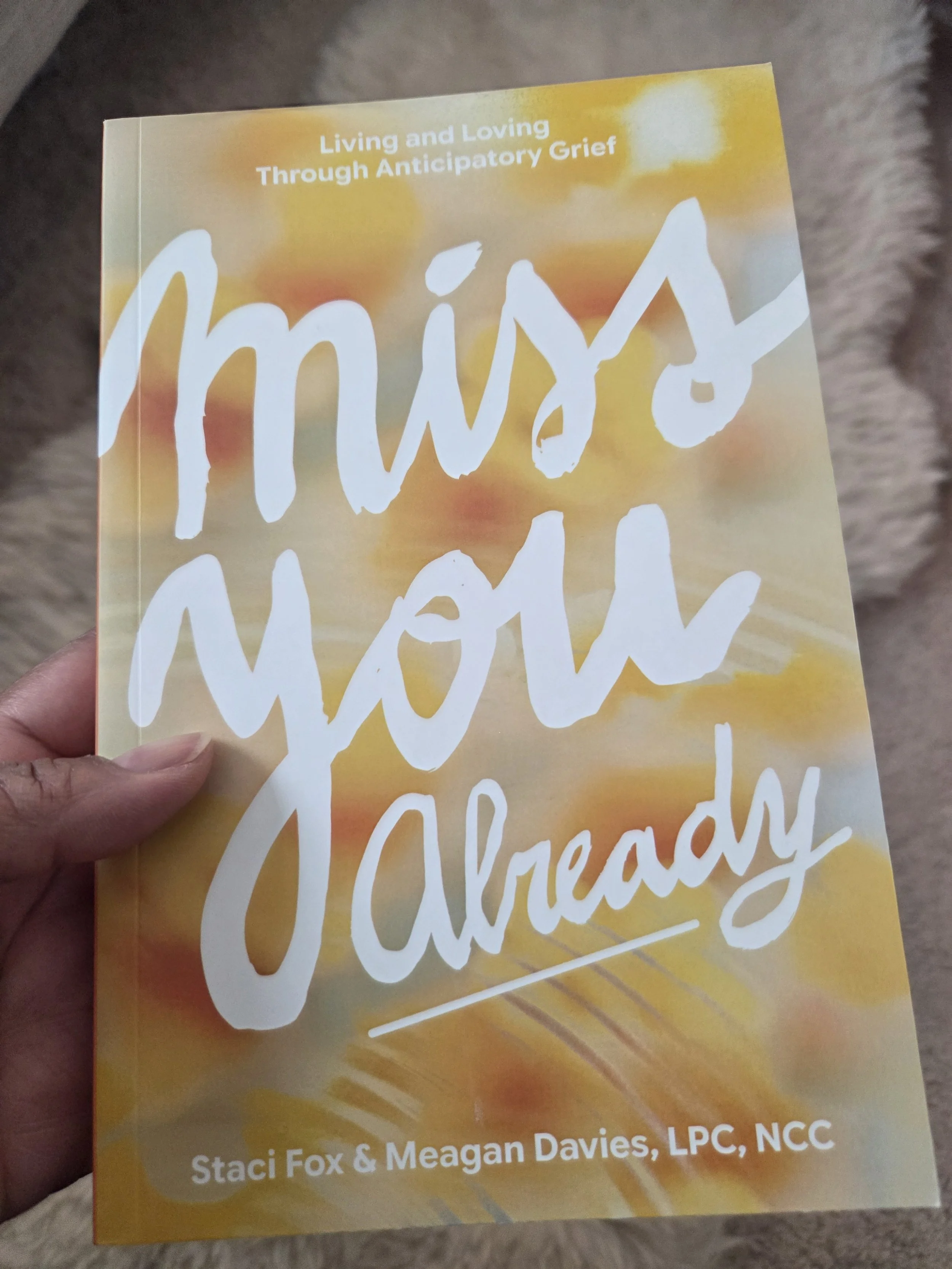
Then, as life sometimes arranges these things, the very next day I went to the book launch for my friend Megan Davies' new book, Miss You Already, which she wrote with her friend Staci Fox.
The book is about anticipatory grief, the grief that begins before a loss has actually happened. Staci was diagnosed with Stage 4 lung cancer, which changed her life and the lives of everyone who loves her. During the conversation, she talked about living with an "ambient fear" that hums in the background all the time.
That phrase resonated. I've learned that anticipatory grief isn't just an emotional experience.
Living with ongoing uncertainty and the expectation of loss can activate our bodies' stress systems over time, showing up as fatigue, difficulty concentrating, disrupted sleep, anxiety, brain fog, or just not having your usual reserves.
Suddenly, the way I've been feeling made more sense. I've been more tired. I've had moments of brain fog. I've felt a sadness and heaviness I couldn't always explain. My body has been carrying something my conscious mind was still trying to understand.
Since the diagnosis, I've also started paying more attention to how many people around me are navigating something similar, especially since most of my friends and clients are around my age. (I'll be 55 next month.) Many have parents living with dementia or chronic illness. They're managing appointments and medications. They're worrying about what comes next.
Which brings me back to something I write about all the time: Give yourself permission to go slower. Not because you aren't capable or ambitious, but because your body has finite reserves, and sometimes you're carrying far more than what shows up on your calendar.
Rest when you can. Move your body. Spend time with people who make you feel safe and loved. Ask for help. Leave some white space on the calendar, and let “good enough” be “good enough” more often than you're used to. Above all, be gentle with yourself.
Taking care of yourself isn't separate from building a rich and meaningful life. It's what makes that life possible, and it's what lets you be present for the people you love without trying to draw from an empty well.
We were never meant to do this alone. That's part of what we will practice together in Everyday Yellow Leadership.
We'll talk about dreams and leadership and what we want the next chapter of our lives to look like. But we'll also talk about how to build lives that can hold those dreams: lives with room for rest, relationships, caregiving, joy, health, uncertainty, and change.
This season of life isn't asking us to squeeze more into already full lives. It's inviting us to become more intentional about how we live them. Maybe one of the greatest gifts we can give each other is a community where we don't have to carry all of it alone.